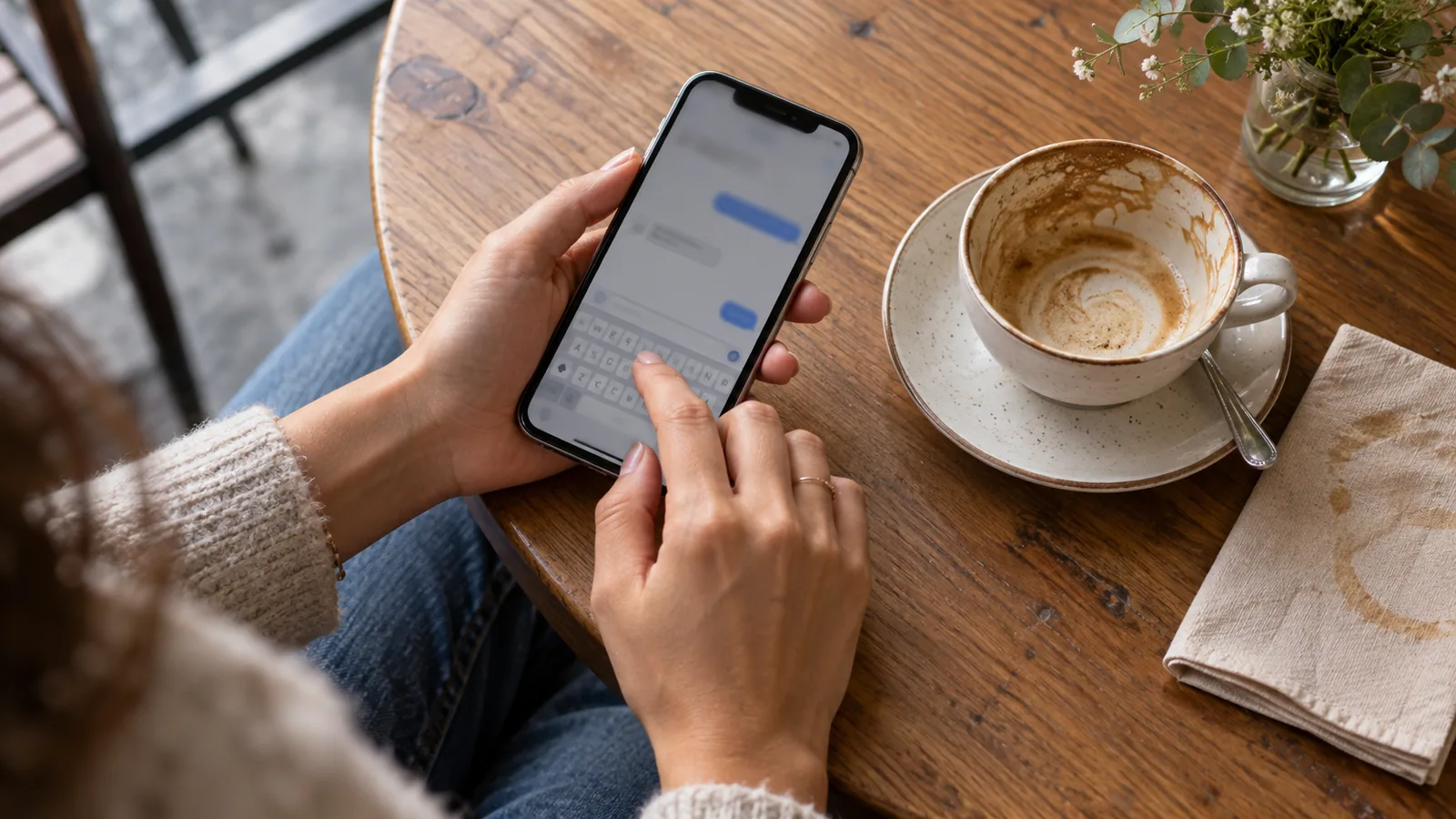
The date ends well, and you open your phone to compose something that sounds impressive. You delete four versions because each seems too eager or too plain. Try a sentence you could actually say aloud: “I had a good time talking with you. I am still thinking about that story from the train.” If you want another date, add a clear invitation. A real detail is more memorable than an elaborate compliment that could have been sent to anyone.
Timing does not need a secret rule. Send a note when you have had a little time to reflect and still mean it. That evening or the next day usually gives the other person enough context to connect the message to the meeting. If you promised to send a link or a recommendation, follow through. Small reliability often says more than perfectly calibrated delay.
Do not write a future you are not ready for. “I have never felt this way” after one date may create a weight neither person can carry. “I would like to see you again” is both warm and proportionate. If you are undecided, you can say you enjoyed meeting without offering another plan yet. The other person deserves clarity when you know your answer, but you do not have to manufacture certainty before it exists.
If your message receives a kind no, accept it without asking for a performance review. If there is no reply after one reasonable follow-up, leave the conversation there. Repeated messages can turn genuine interest into pressure. Likewise, if you do not wish to continue, a brief direct response is better than keeping the exchange alive out of guilt.
A message is a bridge to the next real interaction. It cannot make two people compatible by itself, and it does not need to. Let the words reflect the meeting you had and the choice you are willing to make next.
If the date included a difficult moment, do not paste a cheerful script over it. You can acknowledge that you were nervous or that a conversation felt complicated while still saying you appreciated meeting. Keep it proportionate. A short message can create an opening; a long apology or explanation may ask the other person to process more than they agreed to after one meeting.
A follow-up can be kind even when it closes the door. “Thank you for the afternoon. I do not feel the connection I am looking for, but I wish you well” is clearer than continuing small talk for a week out of guilt. If you feel unsafe, you can block rather than send a final message. Courtesy is useful when it is safe and honest, not when it becomes an obligation to remain available.
Takeaway: Mention one real detail, say how you felt, and invite a next step only if you mean it.
Community conversation
What has your experience taught you?