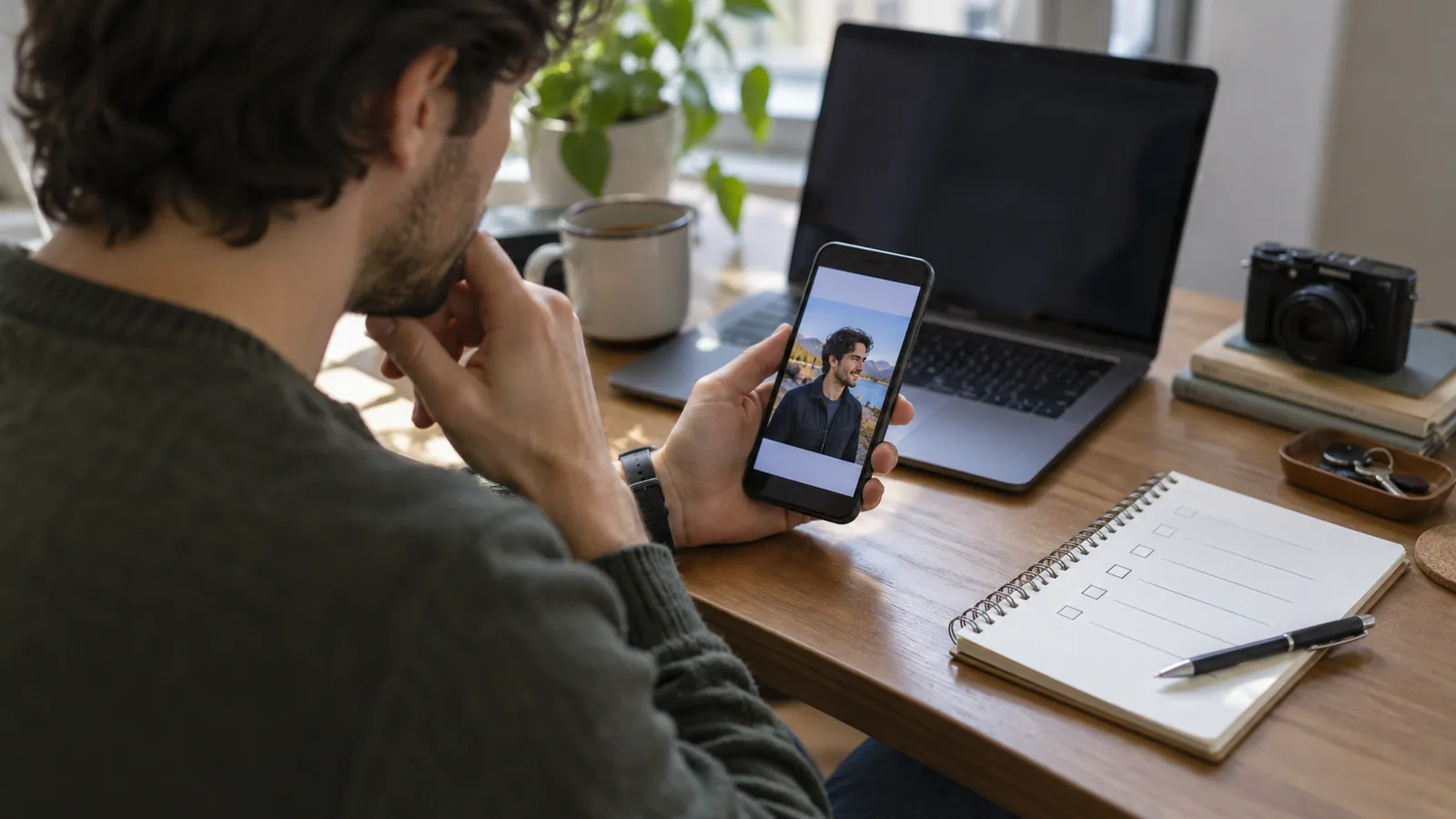
The photo looks harmless: you at a cafe, smiling near a window. Then you notice the logo of your workplace reflected in the glass and a street sign beside your shoulder. Online dating invites you to be recognizable, but it does not require you to publish a map of your daily routine. Before uploading a picture, look at the whole frame. Check addresses, vehicle plates, name badges, school uniforms, travel tickets, and documents on a table. A few seconds of review can let the image remain warm without giving strangers details they do not need.
Use photographs that are recent and genuinely yours. Heavy editing can make an in-person meeting feel like a surprise, while old images may no longer represent how you appear. A useful mix might include a clear portrait and one or two scenes that show an interest without turning friends or family into profile material. Ask permission before including anyone else. Blurring another face is not always enough if a location or event still identifies them.
Consider whether a photo appears on another public account tied to your full name. Reverse image search can connect identical images across sites. You cannot prevent every match, but you can choose photos that are not already attached to a public workplace page or personal profile. Review social media privacy settings too. The U.S. Federal Trade Commission advises limiting what strangers can see when romance scams may begin through social platforms.
Safety is not a demand to become anonymous or suspicious of everyone. A profile needs enough personality to invite a real conversation. The better question is whether each detail serves your introduction or simply exposes someone else's private life. You can mention your favorite neighborhood without showing the exact entrance to your apartment building. You can show a hobby without revealing a fixed weekly schedule.
Revisit the profile after a major move or job change. Remove photos that are no longer accurate or that reveal more than you intended. If a match asks for additional private images as proof of trust, you can say no. Trust develops from consistent, respectful behavior, not from a steadily increasing collection of personal data.
Before publishing a new picture, ask whether the background tells a story you chose. A dog park, favorite bookshop, or hiking trail can be a good conversation starter. An apartment number, identifiable child's uniform, or security badge does a different kind of work. You can crop the frame or choose another photograph without losing the warmth of the moment. If a friend took the picture, ask whether they are comfortable with its use too.
A match who repeatedly demands more photographs before agreeing to an ordinary conversation may not be the right fit. You can offer a brief app call if that feels comfortable, but do not send images you would be distressed to see saved or shared. If you discover a fake profile using your photograph, report it through the platform and keep a record of the account. The purpose of a profile is an introduction, not an archive of your private life.
Takeaway: Choose current, clear photos while checking what appears behind you and who else is included.
Sources and further reading
- What To Know About Romance ScamsU.S. Federal Trade Commission
Community conversation
What has your experience taught you?